
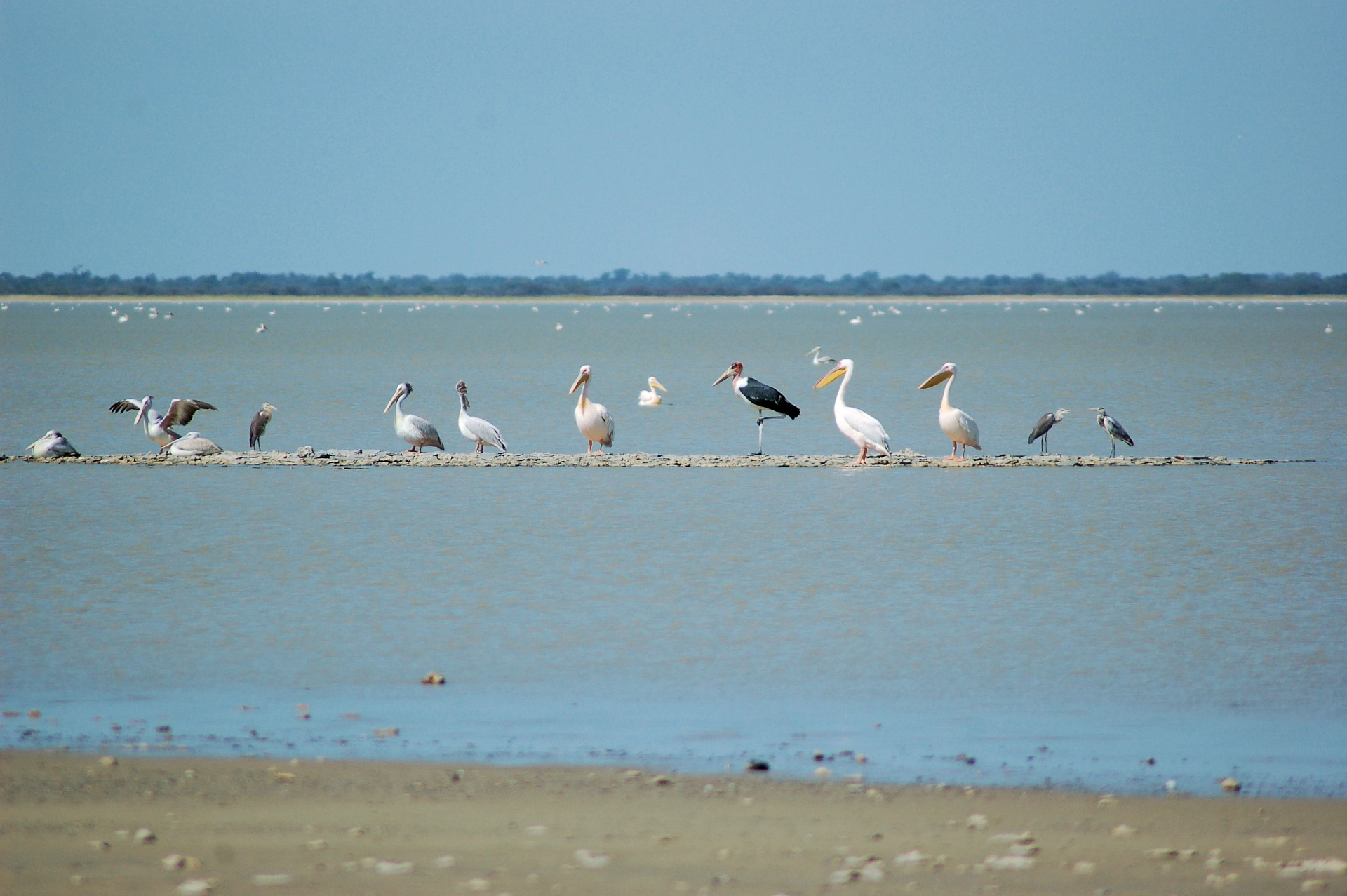
Nata Bird Sanctuary
Ein saisonales Feuchtgebiet am Rande der Makgadikgadi-Salzpfannen, berühmt für seine spektakulären Flamingokolonien und unzählige Wasservögel, die die Lagunen in ein lebendiges Farbenmeer verwandeln.
country
Botswana
size
230 km²
best season
November to April (Wet Season)
famous for
Flamingo breeding colonies & migratory waterbirds
Gateway to the Makgadikgadi Pans
Nata Bird Sanctuary is a community-run reserve located at the southern tip of the Sowa Pan, one of the largest salt pans in the world. Covering 230 km², it serves as a crucial stopover and breeding ground for migratory birds. Unlike the remote Central Kalahari, this sanctuary is easily accessible from the main road, making it a perfect day-trip or overnight stop for travellers exploring northern Botswana.
Flamingo Paradise
The sanctuary is internationally renowned for its flamingo populations. Both greater flamingos (Phoenicopterus roseus) and lesser flamingos (Phoeniconaias minor) flock here in their thousands when water conditions are right. They feed on the blue-green algae and brine shrimp that thrive in the shallow, saline waters. During exceptional rainy seasons, they breed on the pan, creating one of Africa’s most spectacular bird spectacles.
Rich Birdlife Beyond Flamingos
Over 165 bird species have been recorded here. Besides flamingos, visitors can spot great white pelicans, African spoonbills, pied avocets, chestnut-banded plovers, and many migratory waders from Europe and Asia. Raptors such as the pallid harrier and lesser kestrel also hunt over the grasslands. The sanctuary’s hides provide excellent vantage points for close-up viewing and photography.
Wildlife of the Salt Pans
Though the pans are largely barren, the surrounding savannah and grasslands support desert-adapted mammals. Springbok, gemsbok, and zebra roam the fringes, while predators like brown hyena, bat-eared fox, and occasionally cheetah patrol the area. The sanctuary also harbours reptiles such as the Namaqua chameleon and various lizards, perfectly camouflaged against the white salt crust.
Community Conservation in Action
The Nata Bird Sanctuary is owned and managed by the local community through the Nata Bird Sanctuary Trust. This pioneering model ensures that tourism revenue directly benefits the neighbouring villages, providing employment and funding for schools and clinics. Visitors can participate in guided walks with local guides, who share their deep knowledge of the area’s ecology and cultural history, making every visit a meaningful exchange.
Wildlife at Nata Bird Sanctuary
Flora und Fauna entdecken
Waterbirds
Greater Flamingo, Lesser Flamingo, Great White Pelican
Waders & Migrants
Pied Avocet, Chestnut-banded Plover, Ruff
Mammals
Springbok, Gemsbok, Brown Hyena
Reptiles
Namaqua Chameleon, Spotted Sand Lizard, Snakes
Flora
Saltbush, Grasses, Acacia shrubs
Klima & beste Reisezeit
When is the best time to visit?
The sanctuary’s wildlife spectacle is entirely driven by rainfall. The wet season brings life to the pans, while the dry season offers dramatic landscapes and excellent star-gazing.
Jan
Feb
Mar
Apr
Mai
Jun
Jul
Aug
Sep
Okt
Nov
Dez
Hervorragend
Gut
Nebensaison