
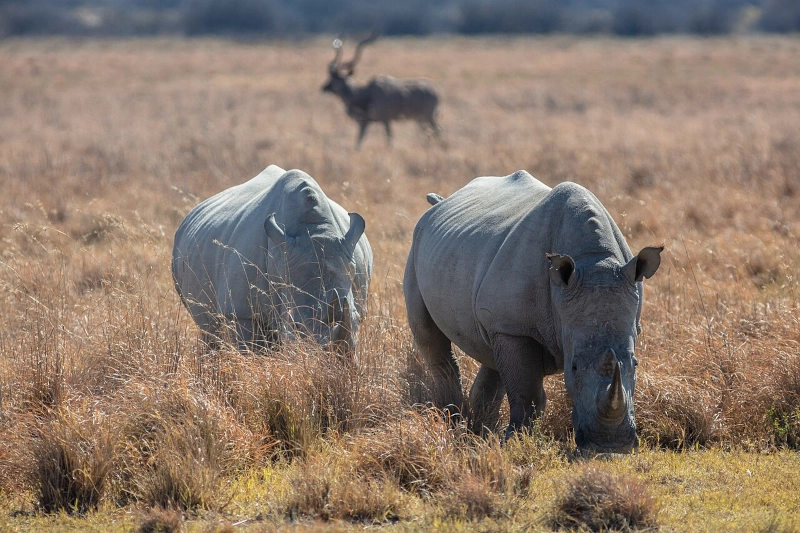
Khama Rhino Sanctuary
A pioneering community-based wildlife project dedicated to saving the vanishing rhinoceros
country
Botswana
size
85 km² (8,585 hectares)
best season
May to October
famous for
White and Black Rhino conservation
A Safe Haven for the Rhinoceros
Established in 1992, the Khama Rhino Sanctuary is a community-based wildlife project established to assist in saving the vanishing rhinoceros. Situated on the edge of the Kalahari Desert, the sanctuary has successfully restored an area formerly teeming with wildlife to its natural state. Today, it stands as a beacon of hope, providing a highly protected environment for both white and black rhinos to breed safely before being relocated to other wilderness areas in Botswana.
Community-Led Conservation
What makes this sanctuary truly special is its origin and operation. It is a prime example of sustainable community conservation:
- Local empowerment: The sanctuary provides economic benefits, jobs, and skills training to the local communities of Serowe, Paje, and Mabeleapudi.
- Education: It features an environmental education center that hosts thousands of school children annually to teach them about the importance of conservation.
- Anti-poaching success: Supported by the Botswana Defence Force (BDF), the sanctuary maintains a rigorous anti-poaching patrol, ensuring a zero-poaching record for its rhinos.
Life Around the Serwe Pan
The focal point of the sanctuary is the Serwe Pan, a large grass-covered depression dotted with several natural waterholes. This area acts as a magnet for the reserve's wildlife. In addition to rhinos, the sanctuary is home to over 30 other animal species. You can easily spot zebra, blue wildebeest, giraffe, eland, springbok, impala, gemsbok, and kudu. Predators such as leopards, brown hyenas, and black-backed jackals are present but require a bit more luck to see.
An Accessible Safari Experience
Unlike many of Botswana's more remote parks, Khama Rhino Sanctuary is highly accessible. Located just off the main tarred road between Serowe and Orapa, it is an ideal stopover for travelers heading to the Okavango Delta, Makgadikgadi Pans, or Chobe. The internal road network is well-maintained, allowing for self-drive safaris even in 2WD vehicles during the dry season, making it a family-friendly introduction to African wildlife.
Flora and Fauna of the Sanctuary
Discover Flora and Fauna
Mammals
30+ species
Birds
230+ species
Reptiles
Various
Plants
Kalahari biome
Climate & Best Time to Visit
When is the best time to visit?
The sanctuary is easily accessible and offers rewarding wildlife viewing year-round, though the dry winter months make spotting animals around the waterholes much easier.
Jan
Feb
Mar
Apr
May
Jun
Jul
Aug
Sep
Oct
Nov
Dec
Excellent
Good
Low