Okavango Delta
A hydrological miracle in the heart of the Kalahari
country
Botswana
size
> 2 million hectares
best season
June to October
famous for
Mokoro safaris
An Oasis in the Desert
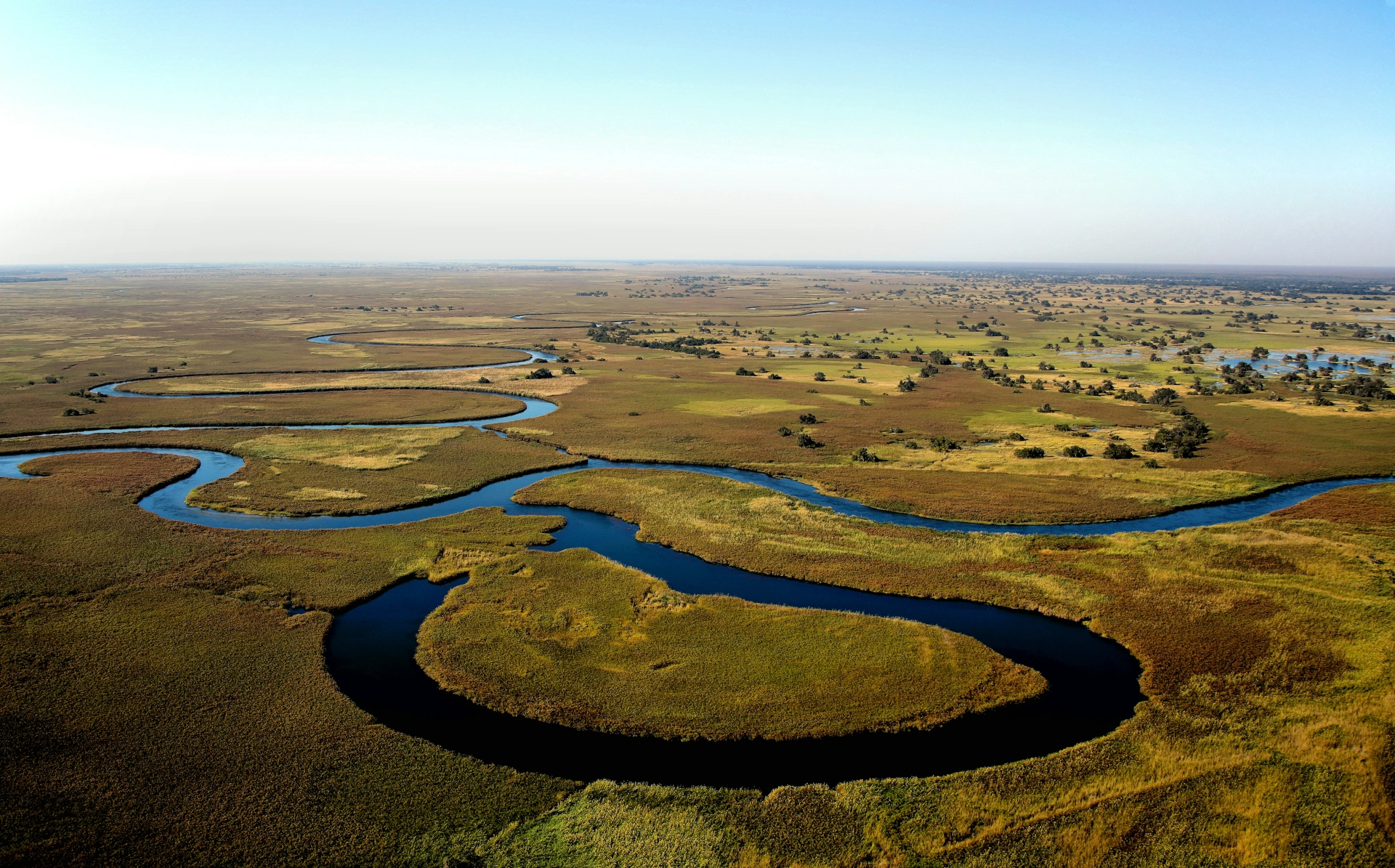
In northwestern Botswana unfolds one of the most poetic and paradoxical ecosystems on our planet: an inland delta that does not seek the ocean, but rather yields its waters to the arid sands of the Kalahari basin. More than a wetland, the Okavango Delta is an almost intact hydrological miracle—a theatre where climatic, geological and biological processes perform a perfect choreography.
The Flood Paradox
The most fascinating feature of this ecosystem of over 2 million hectares is its defiance of the seasons. The Okavango River—the third longest in southern Africa at 1,500 kilometres—floods the delta precisely during the peak of the dry season (June and July). This vital pulse forces native flora and fauna to synchronise their reproductive and growth cycles with a winter that, instead of drought, brings a tide of life.
A Wild Eden (Outstanding Universal Value)
The delta is Africa’s third-largest alluvial fan and operates under a fascinating geomorphological dynamic, dictated by the Rift Valley System. The underground precipitation of calcite and silica shapes islands and habitats that sustain an overwhelming biodiversity. UNESCO recognises this site under three fundamental pillars:
- Aesthetic splendour (Criterion vii): The collision of crystal-clear waters with desert dust creates one of the most unique scenic beauties in the world. Vast brown depressions transform into vibrant oases, drawing immense herds of elephants, buffalo, zebra and red lechwe that pilgrimage for weeks across the desert to drink from this spring.
- A biological laboratory (Criterion ix): It is an invaluable scientific reference. The constant mutation of its islands, channels and floodplains dictates the rhythm of plant succession and animal colonisation, offering a pure window into wetland evolution.
- A stronghold for the threatened (Criterion x): It is the fortress where the last great mammals hold out. Cheetahs, rhinoceroses (both white and black), lions and African wild dogs have adapted their instincts to this amphibious world.
Guardians of the Oasis: Integrity and Challenges
The near-pristine state of the Okavango is due to its vastness, its difficult access and low‑impact tourism (restricted to small camps accessible only by air). However, the balance is fragile and depends on unwavering commitments:
- Water diplomacy: The waters originate in Angola and Namibia. The delta’s integrity depends on these flows continuing without dams or massive extractions—an achievement currently backed by the tripartite OKACOM commission.
- The population puzzle: While elephants thrive, other species decline. Causes include poaching, seasonal fluctuations and, critically, veterinary fences. Though they prevent disease transmission to livestock, fences such as the Northern Buffalo Fence fragment connectivity for species like the sable antelope.
- Extractive vigilance: Mining is prohibited within the delta. Previous licences have been revoked, but thorough monitoring of peripheral activities and potential diamond extraction upstream (Angola) is required to avoid contamination.
- Cultural integration: The delta is not empty. Indigenous hunter‑gatherer tribes have inhabited it for centuries with zero ecological impact. Today’s great management challenge is to integrate their rights, their voice in World Heritage status, and ensure that tourism dividends reach their communities.
Recent Timeline and Cooperation
This living heritage constantly makes headlines on the international conservation agenda:
- July 2025: UNESCO global alert warning that nearly 75% of heritage sites face water risks.
- November 2024: Launch of UNESCO‑GEF Conservation Grants targeting projects in the delta.
- January 2022: Push for initiatives to actively involve local communities in conservation.
- December 2020: UNESCO declares a state of vigilance over potential oil exploration on the borders of Namibia and Botswana.
- Summer 2019: Decisive technical meetings to consolidate transboundary cooperation in the Cubango‑Okavango river basin.
The Inventory of Life
Discover Flora and Fauna
Flora
1,061 species
Birds
482 species
Mammals
130 species
Fish
89 species
Reptiles
64 species
Climate & Best Time to Visit
When is the best time to visit?
The Okavango defies logic: the river's flood peaks right in the middle of Botswana's dry season, creating the perfect contrast for wildlife viewing.
Jan
Feb
Mar
Apr
May
Jun
Jul
Aug
Sep
Oct
Nov
Dec
Excellent
Good
Low