Chobe National Park
The kingdom of elephants and the river that gives life to northern Botswana
country
Botswana
size
11,700 km²
best season
May to October
famous for
Huge elephant herds
Welcome to one of Africa's great wildlife destinations
When you visit Chobe National Park, you will never forget your first glimpse of the dazzling, deep blue Chobe River, winding its way through sandy terrain, small towns, lush floodplains, dense forests of mighty Mopane trees, and endless broadleaf woodlands. The park protects 11,700 km² of the northern Kalahari desert, offering a wilderness and wildlife density that is truly remarkable.
History of Chobe National Park
The original inhabitants of Chobe were the San Bushmen, followed by the Hambukushu, Bayei, and Basubiya. The idea of a national park was first proposed in 1931. The Chobe Game Reserve was established in 1960 and officially declared Botswana's first national park in 1968.
Four Ecosystems in One Park
Chobe National Park is divided into four distinct ecosystems:
- Chobe Riverfront (Serondela): The most visited area, famous for dense teak forests and hundreds of elephants.
- Linyanti: Swamps and channels that attract predators like lions and African wild dogs.
- Savuti: Famous for lions that hunt elephants, and the unpredictable Savuti Channel.
- Ngwezumba Pans: Dry grasslands, ideal for spotting antelopes.
Wildlife Around the Clock
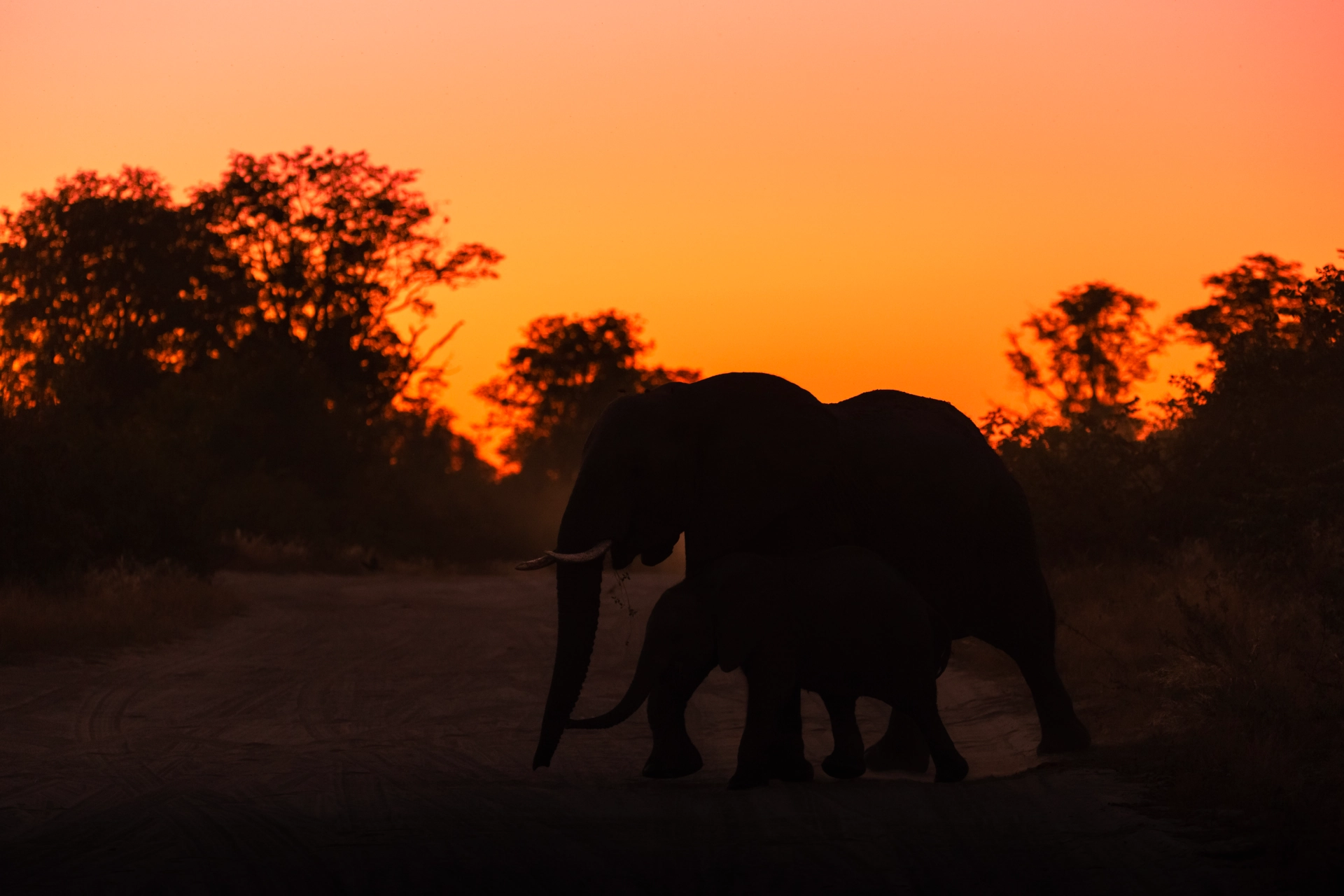
Chobe is renowned for its massive elephant populations (around 120,000 individuals) and the largest buffalo herds. Lions and spotted hyenas are the dominant predators. Along the riverfront, you can observe hippos, crocodiles, and the leguaan (monitor lizard). Cheetahs, leopards, and the rare African wild dog also roam the area.
A Paradise for Birds
With over 460 bird species recorded, Chobe is a top destination for birders. Notable species include the African Fish Eagle, Pel's Fishing Owl, and Kingfishers. During sunset cruises, you can see Carmine Bee-eaters nesting on the banks.
Conservation and Challenges
Conservation faces challenges such as overcrowding at the riverfront during peak season. The park is part of the Kavango-Zambezi (KAZA) Transfrontier Conservation Area, an initiative that connects protected areas across five countries to facilitate wildlife migration.
Chobe Biodiversity
Discover Flora and Fauna
Mammals
+130 species
Birds
460+
Reptiles
60+
Fish
80+
Plants
1000+
Climate & Best Time to Visit
When is the best time to visit?
Chobe offers fantastic wildlife viewing year-round, but the dry season draws the largest herds to the riverfront.
Jan
Feb
Mar
Apr
May
Jun
Jul
Aug
Sep
Oct
Nov
Dec
Excellent
Good
Low