
Savuti
A wild, enigmatic corner of Botswana where the desert meets the Delta, home to legendary predators and a channel that keeps its own secrets
country
Botswana
size
Part of Chobe National Park (11,700 km²)
best season
May to October for predators, November to April for zebra migration
famous for
Lions that hunt elephants, spotted hyenas, and the on-again-off-again Savuti Channel
A channel that comes and goes as it pleases
Here's the thing about the Savuti Channel — nobody can quite figure it out. It runs 100 kilometers from the Chobe River to the Mababe Depression, dropping just 18 meters along the way, and for reasons that geologists still argue about, it turns itself on and off over decades. Livingstone saw it flowing. By 1880 it was bone dry, and it stayed that way for about 70 years. Then in 1957, out of nowhere, water returned. Lately? The marsh has been dry for 18 years. The dead leadwood trees standing in the marsh bed are ghostly reminders that water once shaped everything here — and probably will again, someday.
This is predator country
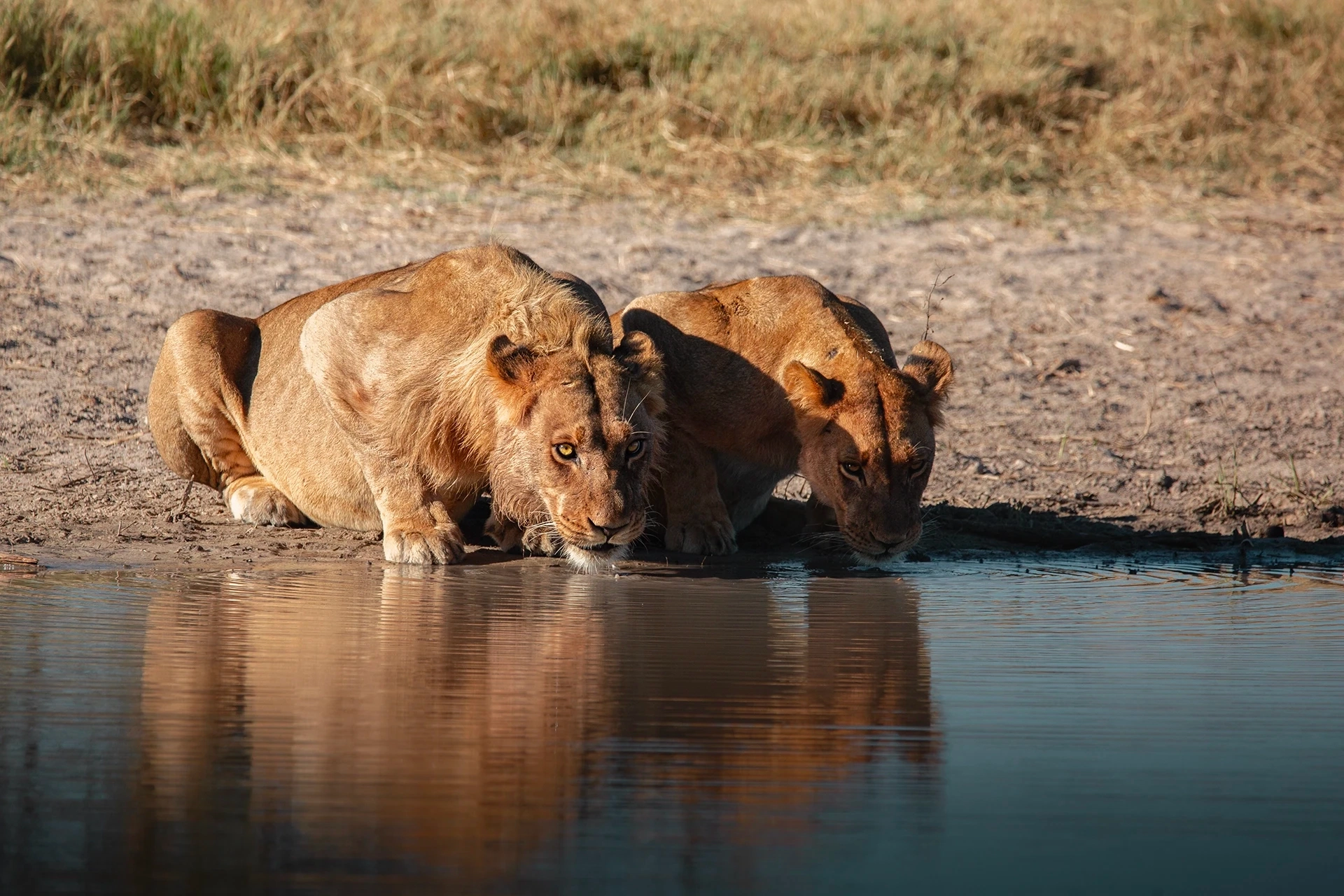
Let's be honest — most people come to Savuti for the carnivores. The lions here have developed a reputation that borders on myth. Certain prides have figured out how to hunt young elephants, a behaviour you'll struggle to find anywhere else on the continent. Meanwhile, massive clans of spotted hyenas patrol the same territory, and the power struggles between these two apex predators are relentless. Throw in leopards, cheetahs, and the occasional pack of wild dogs, and you start to understand why game drives here feel different. More raw. Less predictable. You might watch a kill before breakfast and a turf war before sunset. Nobody can guarantee you'll see these things, of course — but in Savuti, the odds are unusually good.
Linyanti: the secret's still safe here
Just 38 kilometers northwest of Savuti lies an area that somehow remains off most travellers' radar. Linyanti and the western stretches of the Savuti Channel sit on a private reserve, and the vehicle density here is blissfully low. This is where you come when you want to feel properly alone in the bush. Huge herds of buffalo, elephant, and zebra move along the Linyanti River. You can drive for hours and see nobody except your guide and the wildlife. Stay at a small camp like DumaTau, and you can explore the waterways by boat, walk through the bush with an armed guide, or sit silently in a hide while elephants drink just meters away. It's the kind of experience that reminds you why you came to Africa in the first place.
A landscape shaped by an inland sea
Try to picture this: everything you see around you in Savuti — the sand ridges, the rocky outcrops, the depression — was once underwater. A massive inland sea covered this entire region, fed by rivers that we know today as the Upper Zambezi, the Chobe, and the Okavango, all flowing together across northern Botswana towards the Limpopo. Then the earth's crust started moving. Subtle warping blocked the water's path and created a giant lake. Further tectonic shifts later sent the rivers off in new directions — the Zambezi and Chobe veered northeast towards Victoria Falls, while the Okavango spilled into the sands of the Kalahari to form the Delta. The super-lake, cut off and starved of water under a drying climate, simply vanished. What remains is this harsh, beautiful, geologically fascinating landscape that still whispers of its drowned past.
Surviving the heat and the sand
Savuti doesn't do gentle. The sun pounds down, the sand burns underfoot, and in the hottest months animals huddle together in whatever scraps of shade they can find. The vegetation is a mix of camelthorn acacia sandveld, silver terminalia, scrub savanna, and mopane woodland — all of it adapted to survive in conditions that feel almost desert-like. You'll see elephants lining up patiently at waterholes, and when they leave, the dust cloud hangs in the air like smoke. It's harsh, yes, but there's a strange beauty to it. The kind of place that gets under your skin and stays there long after you've gone home.
What lives here
Discover Flora and Fauna
Mammals
Predators and prey in abundance
Birds
Over 450 species in the greater Chobe area
Reptiles
Well-adapted survivors
Vegetation
Tough, resilient, surprisingly diverse
Climate & Best Time to Visit
When should you actually go?
There's no single "perfect" time for Savuti — it honestly depends on what you're hoping to see. Want nonstop predator action? Come during the dry months when everything gathers around the last remaining waterholes. More into lush landscapes, baby animals, and massive zebra herds on the move? The rainy season is your moment.
Jan
Feb
Mar
Apr
May
Jun
Jul
Aug
Sep
Oct
Nov
Dec
Excellent
Good
Low